
Of Sound Mind
The Neuroscience behind Himalayan Singing Bowls
Written by Michael Brotherton
Traditional Himalayan singing bowls, like the ones we have up at the Thyme, are ancient metal instruments from the Himalayan region, long used in meditation and ceremonial practices. When played, they produce deep, resonant tones rich in harmonics that linger and gently pulse through the air.
At our retreats, these bowls are often used in “sound baths,” where participants rest while the sounds wash over them. From a scientific perspective, these sounds act as a powerful sensory anchor, helping the mind shift out of habitual mental chatter and into a more relaxed, present state.
Peer-reviewed research from the past decade shows that listening to singing bowls, both in group settings and individually, is consistently associated with reduced stress and improved mood. Studies report significant drops in tension, anxiety, anger, and fatigue after a single session, alongside increases in calm, positive mood, and overall well-being.
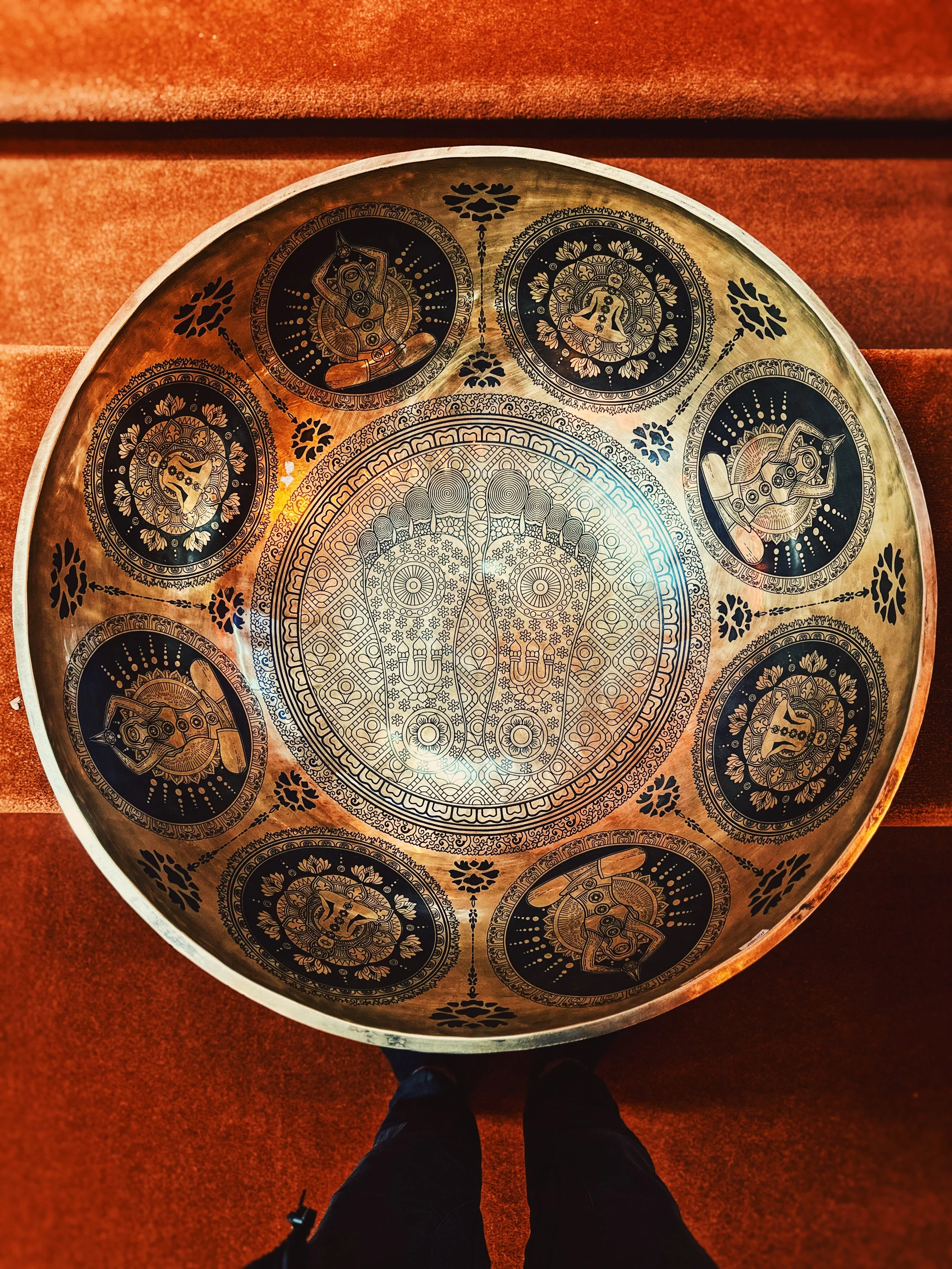
Physiologically, singing bowl sessions tend to slow breathing, lower heart rate, and increase heart-rate variability, a key marker of a resilient, well-regulated nervous system.
Photo: Sound bowls from David Shemesh’s Sound School at The Thyme, shot by Asi Ze'evi
Emerging neuroscience research adds another layer: singing bowls appear to shift brain activity toward patterns commonly seen in meditation. EEG studies show reductions in high-frequency “busy” brain waves and increases in slower rhythms linked to deep relaxation and inward focus. Specifically, alpha, beta, and gamma wave amplitudes all decreased (by roughly 6%–18%) during one study, and this reduction persisted even for a short time after the sound ended.
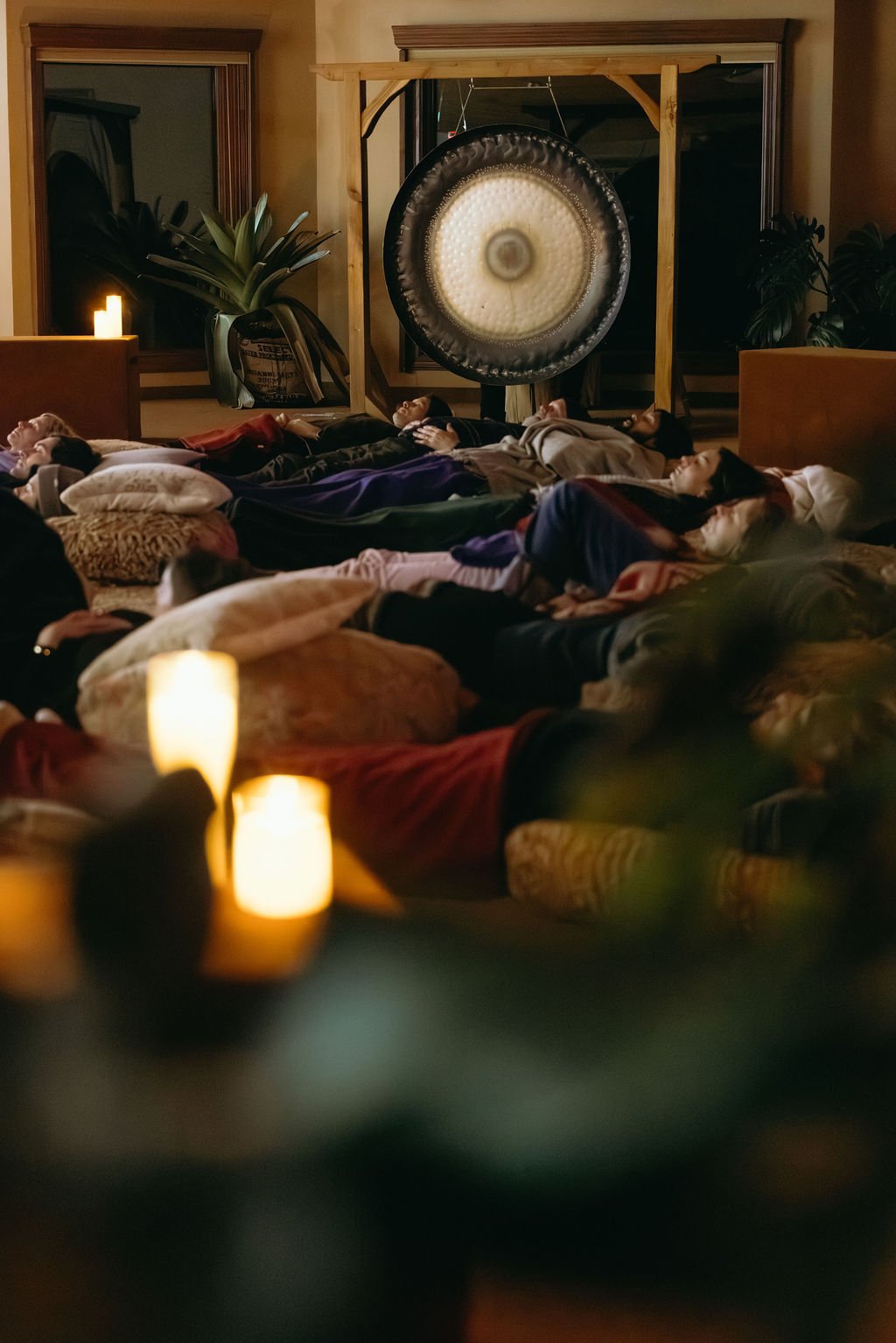
In some cases, the rhythmic tones of the bowls even synchronize group brain activity into calm, meditative frequencies.
Photo: Resonance Retreat, shot by Kiernan Rome
While research is still evolving, the evidence suggests that singing bowl meditations offer a gentle, low-risk way to support relaxation, emotional balance, and mental clarity, especially when practiced consistently, as they are at The Thyme.
1. Panchal, S. et al. (2020). Impact of Himalayan Singing Bowls Meditation Session on Mood and Heart Rate Variability. Int. J. Psychotherapy Practice and Research, 1(4): 20–29openaccesspub.orgopenaccesspub.org.
2. Rio-Alamos, C. et al. (2023). Acute Relaxation Response Induced by Tibetan Singing Bowl Sounds: A Randomized Controlled Trial. EJIHPE, 13(2), 317–330
